
Home was a single room stitched together with rusted tin and borrowed walls.
The air always smelled the same—stale alcohol, sweat, damp clothes that never fully dried. By the time Aarav reached the slum, the sun had dipped low, and shadows stretched like they were tired of existing too.
His father was already drunk.
He could tell by the way the door hung open, by the sound of something breaking inside, by the silence of his siblings.
Silence was never good.
“Aarav,” his younger sister whispered when she saw him. Her eyes were too big for her face, too old for her age. “He’s angry.”
“I know,” he said.
He always knew.
His father sat on the floor, bottle tipped sideways, eyes red and unfocused. The moment he saw Aarav, his face twisted—not with recognition, but resentment.
“So you come back,” the man slurred. “Think school makes you better than me?”
Aarav didn’t answer. Answers made it worse.
The slap came fast. Then another. He tasted blood and didn’t bother reacting. Pain had rules—if you didn’t cry, it ended faster.
“Useless,” his father muttered, grabbing his shirt. “Feeding mouths I never asked for.”
Aarav glanced at his siblings. His brother clutched his sister’s hand, shaking. Aarav stepped forward without thinking, placing himself between them.
That earned him the beating.
When it was over, his father passed out like nothing had happened.
Aarav cleaned the mess in silence. He washed his siblings’ faces with borrowed water, tore a piece of his shirt to wipe blood from his lip, and whispered stories until they slept.
Only then did the weight hit him.
He stepped outside.
The night air was colder. Quieter. For a moment, he stood there, listening to the distant sounds of the city—people laughing, living, breathing like it was easy.
He wondered what it would feel like to stop.
Not dramatically.
Not loudly.
Just… stop.
No more hunger.
No more fists.
No more waking up afraid.
He walked. Past the narrow lanes, past the broken streetlight, to the edge of the railway embankment where the city forgot people like him existed.
He sat down.
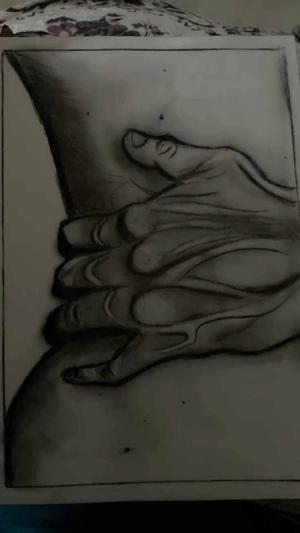
For a long time, he stared at his hands. They were small for his age, scarred in places he couldn’t remember earning. These hands had fed his siblings. These hands had taken blows meant for them.
And still—it wasn’t enough.
“I’m tired,” he whispered, to no one.
“Aarav!”
His head snapped up.
That voice didn’t belong there.
“Methli?”
She stood a few steps away, hair messy, breathing hard, school bag still on her shoulder. She looked terrified—and angry.
“I was looking for you,” she said. “You didn’t come home the usual way.”
“You shouldn’t be here,” he said quickly. “Go back.”
She didn’t.
She walked closer, eyes darting around, then fixed on him.
“You’re crying.”
“I’m not.”
“You are.”
She sat down beside him without asking.
For a while, neither spoke. Then she reached into her bag and pulled out a small sweet, pressed it into his palm like it was a secret.
“My mother gave me two,” she said. “I saved one.”
He stared at it. Something in his chest cracked.
“You don’t have to save me,” he said quietly.
She frowned, confused. “I’m not.”
Then, softer, “I just didn’t want you to be alone.”
That was it.
That stupid, simple sentence.
No speeches.
No promises.
No knowing what she had interrupted.
Just presence.
The urge loosened its grip—not gone, but quieter. Bearable.
They walked back together. She talked about a stray dog she wanted to adopt, about how the moon looked like it had a bite taken out of it.
He listened.
She never knew what she stopped that night.
She never knew how close he was to disappearing.
But as he watched her walk away at the edge of the slum, Aarav understood something terrifying and beautiful:
If she ever left his life—
he didn’t know if he would survive it.
And that was the day Methli became more than sunshine.
She became his reason to stay.

Write a comment ...